
 What Happens to a Cricket Market When a Player Retires Hurt?
 2026-08-18
Introduction
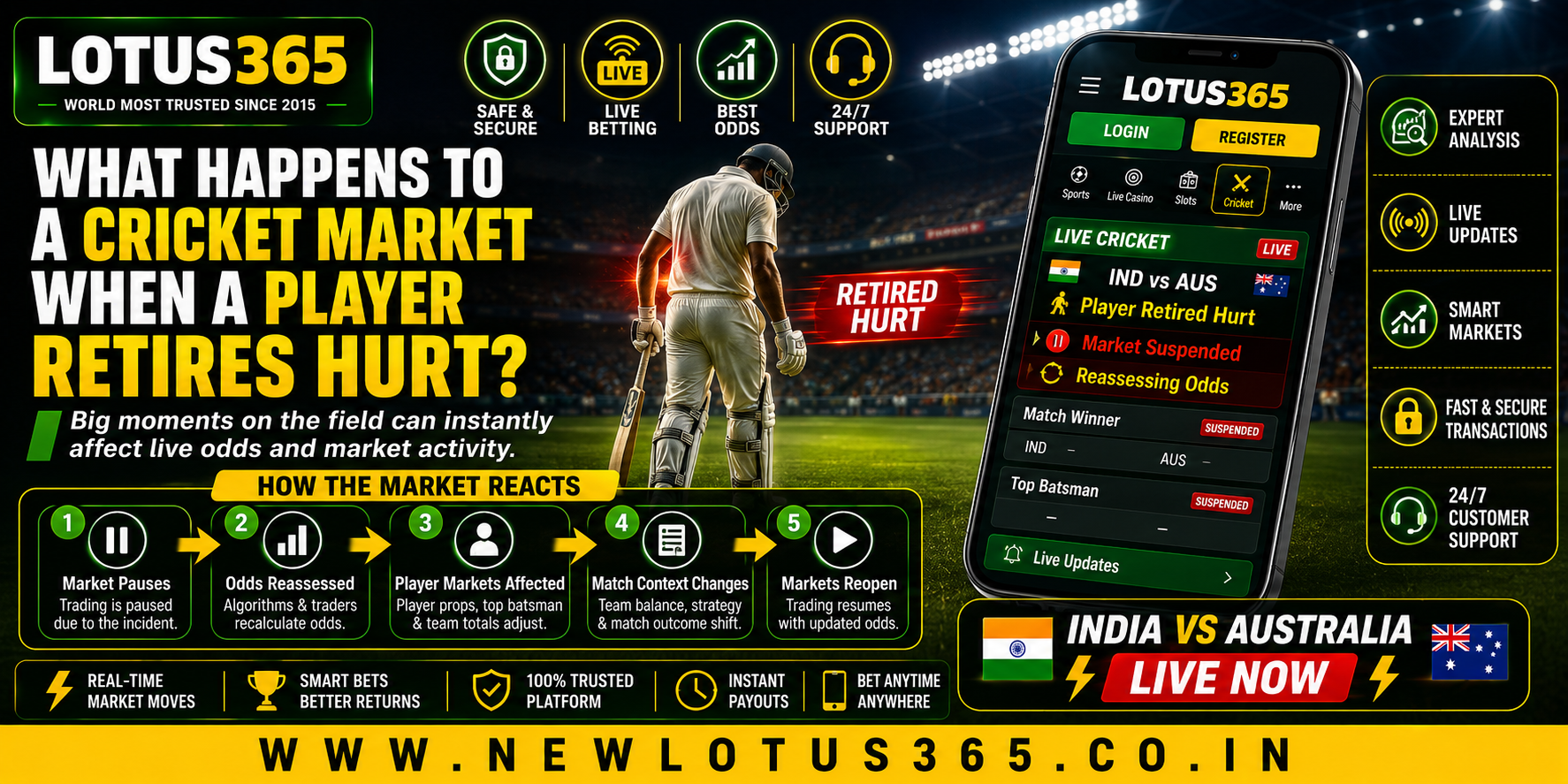
Cricket markets can change quickly when an important player leaves the field because of an injury. For users following live cricket information through Lotus365, a “retired hurt” situation can create confusion about what happens to existing markets, player-related selections, and match information. The exact treatment depends on the market type and the applicable rules, so understanding the basic process is important.
What Does Retired Hurt Mean?
A batter is generally described as retired hurt when they leave the innings because of an injury or another acceptable physical reason and are unable to continue batting at that moment.
This is different from being dismissed.
A batter who is retired hurt:
- Has not been dismissed by the opposition.
- May potentially return later.
- Remains part of the team's batting situation.
- Can affect how the innings develops.
- May influence player-specific markets depending on the rules.
The official match regulations and competition rules determine how the situation is recorded.
Why Can It Affect Cricket Markets?
A player's unexpected departure can change the conditions surrounding a live market.
For example, if an opening batter retires hurt after making a significant contribution, the team's batting order may change. Another batter could arrive at the crease, altering expectations about partnerships, scoring patterns, and individual performances.
However, a market does not automatically become successful or unsuccessful simply because a player leaves the field.
The settlement depends on the specific market rules.
Match Markets and Player Markets Are Different
One of the most important distinctions is between match-related markets and player-specific markets.
Match Markets
These may relate to outcomes such as:
- Match winner
- Team runs
- Innings totals
- Overs-based outcomes
- Session-related markets
A player's retirement may influence these markets, but the market can continue if the underlying event remains active.
Player Markets
These may relate directly to an individual player's performance.
Examples can include:
- Runs scored
- Player to score a fifty
- Player to score a century
- Player performance-related markets
Because these markets are directly connected to one player, retirement hurt can create specific settlement questions.
What Happens to a Batter's Runs?
If a batter retires hurt after scoring runs, those runs normally remain part of the official score.
For example, if a player scores 48 before leaving the field injured, those 48 runs are still recorded in the player's innings.
However, whether a particular market is settled immediately, remains open, or is treated differently depends on its stated rules.
Users should therefore avoid assuming that the player's retirement automatically determines the outcome of every related market.
Can the Batter Return?
In many forms of cricket, a batter who retires hurt may be able to return later in the innings if they recover sufficiently and the applicable rules permit it.
This is another reason why the phrase “retired hurt” should not automatically be interpreted as “finished batting.”
The eventual match situation can depend on:
- The player's recovery
- Team requirements
- The fall of wickets
- Available batters
- Competition regulations
Why Market Rules Matter
Different platforms and competitions can apply different settlement conditions. A market may have specific provisions covering injuries, retirements, abandoned matches, or players not completing an innings.
Before participating in any market, users should check:
- Market-specific rules
- Settlement conditions
- Player participation requirements
- Minimum event requirements
- Official match status
This is especially important for live markets because circumstances can change quickly.
What Happens During a Live Match?
When a player retires hurt, market information may temporarily change while the situation is assessed.
Possible developments include:
- The player leaves the field.
- Match officials record the situation.
- A replacement batter continues the innings.
- The player's condition becomes clearer.
- The market is updated according to applicable rules.
A temporary suspension or adjustment does not necessarily mean a market has been cancelled.
Avoid Assuming a Market Outcome
One common mistake is assuming that an injury immediately decides a player-related selection.
For example, if a batter leaves on 35 runs, that does not automatically mean every “under” or “over” market will be settled in the same way.
The correct outcome depends on the market's terms.
A careful user should always look at the applicable settlement rules rather than relying on assumptions or comments from other users.
How Mobile Users Can Stay Updated
Live cricket followers often use smartphones to monitor scorecards, player updates, and market information. When using a Lotus365 ID, users should ensure that they access the legitimate platform and keep their account credentials private.
Official scorecards and competition announcements should be preferred when confirming whether a player has retired hurt, returned to the field, or been officially ruled out.
Responsible Approach to Live Markets
Injury situations can create uncertainty, and uncertainty can encourage rushed decisions. Users should avoid reacting emotionally to sudden player updates.
A responsible approach includes:
- Read the market rules.
- Confirm the player's status.
- Check official match information.
- Avoid chasing losses.
- Set a personal spending limit.
- Never assume a market result.
- Accept that some situations are unpredictable.
Conclusion
A retired-hurt situation can have an important effect on cricket markets, but it does not automatically determine how every market will be settled. Match markets and player-specific markets may be treated differently, while the player's official score remains part of the match record.
The safest approach is to understand the exact market conditions and wait for confirmed information when an injury occurs. Since live cricket can change rapidly, checking official match updates and applicable settlement rules is more reliable than making assumptions based on the player's departure.
FAQs
What does retired hurt mean in cricket?
It generally means a batter has left the innings because of injury or another acceptable physical reason without being dismissed.
Does a retired-hurt batter lose the runs already scored?
No. Runs scored before the player retires remain part of the official innings score.
Can a retired-hurt batter return?
Depending on the circumstances and applicable competition rules, a batter may be permitted to return later in the innings.
Does retiring hurt automatically settle a player market?
Not necessarily. Settlement depends on the specific market's rules and conditions.
Are match markets affected when a player retires hurt?
They can be influenced by the player's absence, but whether a market remains active or is adjusted depends on the relevant market rules.
What should users check after a player retires hurt?
They should check the official match status and read the specific market's settlement conditions rather than assuming the outcome.